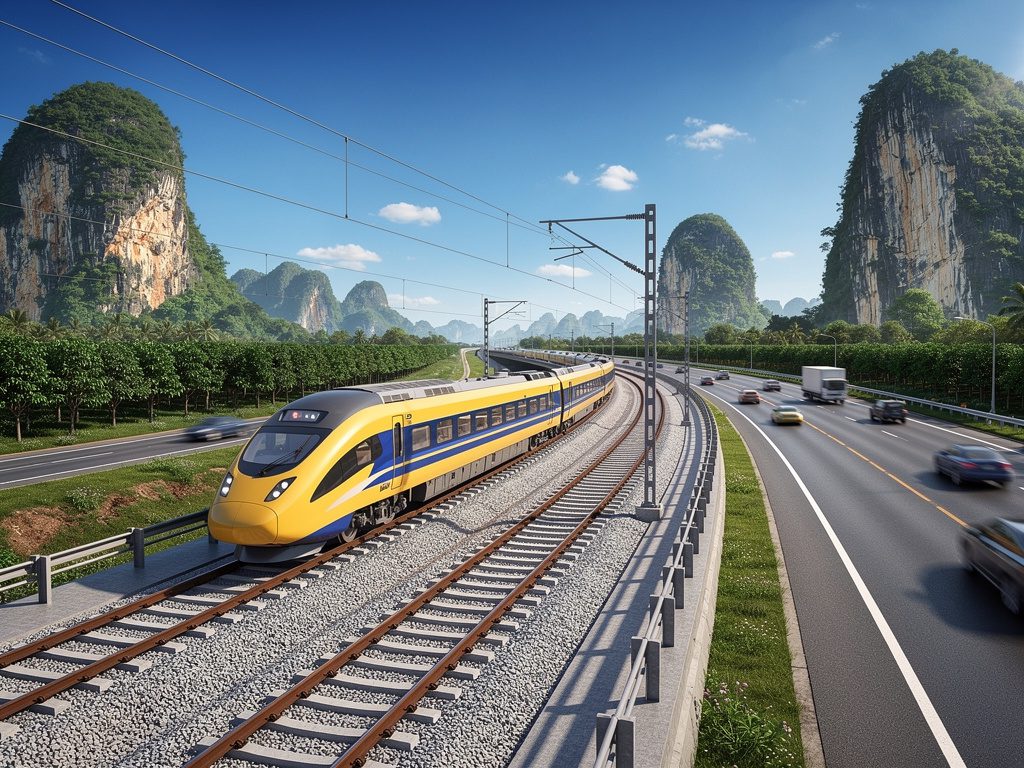
Phuket, Phang Nga and Krabi have never had a railway. The plans presented this week would change that.
At the Phuket Real Estate Association’s sustainability seminar on 23 September 2026, a speaker representing Dr Jiraroth Sukolrat, Director of the Office of Transport and Traffic Policy and Planning, set out the MR9 motorway and railway, a light rail line on the island and a new electric bus network.
The MR9 corridor
“M stands for motorway and R for railway,” the speaker explained. The corridor would carry both, from Don Sak in Surat Thani, the ferry port for Koh Samui, through Phang Nga to Tha Nun and across to Phuket.
The State Railway of Thailand’s new line comes in two sections. Section 1 runs 175 kilometres from Don Sak District to Mueang Phang Nga. Section 2 runs 54 kilometres from Mueang Phang Nga to Thalang District in Phuket. A separate feasibility study covers the Tha Nun to Phuket section, and a rail link to Krabi and its airport is also planned.
“Samui is the pearl of the Gulf of Thailand and Phuket is the pearl of the Andaman,” the speaker said. “Today the two are not connected.”
When the Ministry of Transport published its motorway and railway blueprint in March 2022, the Surat Thani to Phuket route was listed at 252 kilometres. By September 2024, the national programme covered 10 routes, backed by 457 billion baht, about USD 13.9 billion, over five years.
Light rail and buses on the island
The Phuket Mass Transit System is planned along Route 402. Phase 1 runs from Phuket International Airport to Chalong. Phase 2 runs from Tha Nun station to the junction of Highways 402 and 4026 near the airport. The expressway comes first, because building light rail on Route 402 today would put very heavy pressure on traffic.
Buses arrive sooner. The 20 year public transport plan for Phuket, covering 2027 to 2046, sets out an electric bus network of 10 routes and 775 stops across 576 kilometres of round trip service, replacing the songthaews. On current plans, 379,225 people, 48.8% of the 777,100 in the service area, would live within 400 metres of a stop.
Asa Marsh on the railway
“Some of my fondest memories of coming to Thailand as a kid were on trains,” said Asa Marsh, Managing Director of Easy Living Phuket. “Thailand has an amazing railway across the east and all around the north, but on the Andaman coast there’s nothing available yet.”
“Linking Phuket, Samui and Krabi by rail and motorway is going to do wonders for the economy. It’s going to ease traffic for tourists, for people going to work every day, and for the transport of goods. A lot of the vehicles on Phuket’s roads are delivery trucks.”
“This would be the first railway to connect the Andaman provinces together. I don’t think people realise how big that is.”
What it means for buyers
Rail changes how people choose where to live. Properties within walking distance of a station or a well served bus stop tend to hold wider appeal, both for owners and for tenants.
On Phuket, the planned line follows Route 402 through Thalang and down to Chalong, and the intercity link meets it at Tha Nun in the north. Those corridors are worth understanding before you buy.
The timelines are long, and design and feasibility work come first. We would never recommend paying a premium today for a station that has not been approved. We will, though, help you understand where the routes run and how a property sits against them.
If you’d like to talk through the rail and bus plans against a property you’re considering, speak to the Easy Living Phuket team.
Rate used: 32.9 baht to the US dollar, September 2026.